

High-Quality O-Rings Wholesale – NBR, MVQ, EPDM, FPM – Available at Simmering.pl
Your Trusted O-Ring Distributor and Wholesaler – Simmering.pl
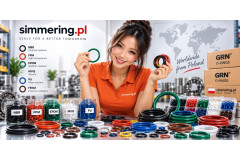
At simmering.pl, part of TG Ersatzteile Polska Sp. z o.o., we specialize in the wholesale supply of O-rings to businesses across multiple industries. Our vast selection covers NBR, MVQ (Silicone), EPDM, and FPM (Viton) O-rings, offered in a variety of sizes and packaging options to match your specific needs.
We offer competitive prices for bulk orders — from packs of 100 O-rings for regular stock replenishment to industrial packs of 1000 O-rings, available at even lower unit prices. For large O-rings (inner diameter starting from 50 mm), we also provide flexible single-unit sales, allowing you to purchase exactly what you need.
Comprehensive Range of O-Rings – From Standard to Specialized Seals
Our extensive catalog ensures we meet the needs of retail stores, OEM manufacturers, service companies, and industrial plants. Whether you are sealing hydraulic components, industrial machinery, pumps, compressors, automotive systems, or food processing equipment — we have the right O-ring for you.
Industries We Serve
✅ Automotive – engine components, fuel systems, gearboxes, cooling systems
✅ Agriculture – hydraulic systems, agricultural machinery, irrigation systems
✅ Food Processing – food-grade seals for production lines, mixers, fillers
✅ Pharmaceutical & Medical – equipment requiring chemical-resistant and FDA-compliant seals
✅ HVAC & Plumbing – piping systems, valves, pumps, heating units
✅ Oil & Gas – industrial seals for pipelines, drilling equipment, compressors
✅ Chemical Industry – chemical-resistant O-rings for pumps, dosing systems, tanks
✅ Aerospace – high-performance seals for hydraulic and pneumatic systems
✅ General Industry – any application requiring reliable sealing in rotating or static equipment
Materials Explained – Choosing the Right O-Ring for Your Application
NBR (Nitrile Butadiene Rubber)
? Excellent oil and fuel resistance
? Ideal for hydraulic applications, automotive and machinery
? Temperature range: -40°C to +100°C
MVQ (Silicone)
? Outstanding temperature resistance
? Excellent for food, medical and pharmaceutical industries
? Temperature range: -60°C to +200°C
EPDM (Ethylene Propylene Diene Monomer)
? Excellent weather, ozone, and water resistance
? Suitable for outdoor equipment and potable water systems
? Temperature range: -40°C to +130°C
FPM (Viton®)
? Exceptional chemical, fuel, and high-temperature resistance
? Perfect for chemical processing, fuel systems, and high-performance machinery
? Temperature range: -25°C to +200°C
Why Choose Simmering.pl for Your O-Ring Supply?
✅ Unmatched Range
We stock thousands of sizes in all key materials — from tiny seals for micro-systems to large industrial O-rings for heavy-duty machinery.
✅ Flexible Packaging
Buy in bulk (1000 pcs) to get the lowest prices, or order convenient 100 pcs packs for regular use. For oversized O-rings (from 50 mm ID), we offer single-unit sales.
✅ Competitive Wholesale Pricing
As a direct importer and wholesaler, TG Ersatzteile Polska guarantees market-leading prices for O-rings, passing on savings to our customers.
✅ Expert Support
Not sure which O-ring fits your application? Our technical team is ready to advise you on the right material, size, and profile for your specific needs.
✅ Fast Shipping Across Europe
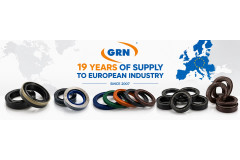
With large stocks ready for dispatch, we provide quick delivery to customers across Poland, Germany, Czech Republic, Slovakia, and the entire EU market.
Frequently Asked Questions (FAQ)
1. Can I order different materials in one order?
Yes, you can mix NBR, MVQ, EPDM, and FPM O-rings within a single order — we are flexible and adapt to your needs.
2. Do you offer certificates for food-grade or chemical applications?
Yes, on request, we can provide material certificates (e.g., FDA for food processing or chemical resistance certificates).
3. How quickly can I receive my order?
Orders placed by midday are usually shipped the same day, with delivery within 24-48 hours in Poland and within 2-5 days across Europe.
4. What if I need a non-standard O-ring size?
We can source or manufacture custom sizes for larger projects — please contact our sales team with your specifications.
5. Are your prices competitive?
Absolutely! As a direct importer, we eliminate unnecessary intermediaries, allowing us to offer wholesale prices directly to you.
Keywords – Optimized for Search Engines
O-rings wholesale Poland, industrial O-rings distributor, NBR O-rings supplier, MVQ silicone O-rings in bulk, EPDM O-rings for industrial use, Viton O-rings for chemical applications, O-rings for food processing, large size O-rings supplier, rotary shaft seals and O-rings wholesaler, simmering.pl O-rings catalogue, high-quality industrial seals Poland, buy O-rings online Europe, TG Ersatzteile O-rings distributor, professional O-ring supplier, best prices O-rings wholesale
Short Summary
At simmering.pl, we offer an extensive selection of O-rings in NBR, MVQ, EPDM, and FPM, available in both standard packs (100 pcs) and bulk packs (1000 pcs) at competitive wholesale prices. For larger diameters (50 mm and above), we offer single-unit sales. Whether you are a retail store, a manufacturer of machinery, or a service provider across industries such as automotive, food, agriculture, pharmaceuticals, or oil & gas, we have the right sealing solutions for you.
Discover the complete range at simmering.pl — your trusted O-ring supplier in Poland and Europe.
❓ Do the products we purchase from you contain natural rubber or other natural materials that could fall under the EUDR regulation?
The products we offer, including seals, bearings, and O-rings, are primarily based on synthetic rubber, which does not originate from natural sources.
In our current product range, synthetic rubber is commonly used, especially in the production of seals and O-rings. Therefore, the products supplied by us do not contain natural rubber or any other materials that could fall under the EUDR regulation, assuming that the sources of synthetic rubber comply with the appropriate environmental protection standards.
❓ Are these products made exclusively from synthetic rubber, which is not subject to EUDR regulations?
Yes, the products we offer are made from synthetic rubber, which does not originate from natural sources. Synthetic rubber is a chemical product that is created through industrial processes, and its production does not involve the exploitation of natural resources such as tropical forests.
Synthetic rubber is an artificial material produced through chemical processes that mimic natural rubber (mainly derived from the latex of the rubber tree Hevea brasiliensis). Unlike natural rubber, synthetic rubber is made from petroleum and other chemicals.
According to the provisions of the EUDR regulation, only materials of natural origin, such as natural rubber, are subject to regulations concerning deforestation and forest degradation. The synthetic rubber we use in our production is not subject to these regulations, as its production does not directly impact forest ecosystems.
Summary
In summary, the products supplied by our company are made from synthetic rubber, which is not subject to the EUDR regulation. Should you have any further questions regarding the specific ingredients or materials used in the production of our products, we are always ready to provide detailed information and ensure compliance with applicable environmental regulations.
We hope this answer fully clarifies the issues related to the EUDR regulation and confirms that our products comply with the current environmental protection standards. If you have additional questions or need further information, please feel free to contact us.
❓ How is synthetic rubber produced?
The production of synthetic rubber involves several key chemical stages, using various types of monomers (small molecules that form long polymer chains) and catalysts. The main types of synthetic rubber are SBR (styrene-butadiene rubber), BR (butadiene rubber), NBR (nitrile rubber), EPDM (ethylene propylene diene monomer), and others. Below is a general production process:
-
Monomer Selection:
-
SBR: Made from a blend of styrene (C6H5CH=CH2) and butadiene (C4H6). The polymerization reaction results in a material that has properties similar to natural rubber.
-
NBR: Formed by copolymerizing butadiene with acrylonitrile. Its main feature is resistance to oils and fuels.
-
EPDM: Produced from ethylene, propylene, and a diene (a bifunctional compound), giving it resistance to high temperatures, ozone, and other atmospheric factors.
-
-
Polymerization:
-
The monomers undergo a polymerization reaction, where small monomer molecules are joined together to form long polymer chains. The polymerization process can occur under various conditions (e.g., high temperatures, in the presence of catalysts).
-
For SBR, polymerization occurs through a reaction between styrene and butadiene in the presence of appropriate catalysts.
-
-
Vulcanization:
-
After polymerization, synthetic rubber is vulcanized, which means that sulfur is added to bond the polymer chains, creating a more durable and elastic material. Vulcanization gives rubber the desired mechanical properties, such as elasticity, wear resistance, and tensile strength.
-
-
Additive Mix:
-
Various additives are also incorporated in the production of synthetic rubber, such as fillers (e.g., carbon black), antioxidants, and chemicals that enhance the material’s resistance to external factors, such as UV radiation, ozone, and high temperatures.
-
Synthetic Rubber Mixture
Synthetic rubber is not a uniform material – it is a mixture of different monomers and additives, which after polymerization and vulcanization, forms a material with the desired properties. Here are some examples of typical mixture ingredients:
-
Monomers: The key components of the polymerization reaction, such as styrene, butadiene, acrylonitrile, ethylene, and propylene.
-
Fillers: Particles like carbon black, which increase the material’s strength and improve its resistance to wear.
-
Plasticizers: Substances added to improve the material’s flexibility.
-
Vulcanizing Agents: Substances like sulfur that enable vulcanization and improve the durability of rubber.
Types of Synthetic Rubber
-
SBR (styrene-butadiene rubber): Synthetic rubber that closely resembles natural rubber, widely used in tires and other products requiring high wear resistance.
-
NBR (nitrile rubber): Rubber resistant to oils and fuels, commonly used in the automotive industry for seals, hoses, and other applications involving petroleum-based substances.
-
EPDM (ethylene propylene diene monomer): Rubber with high resistance to weather conditions, ozone, and high temperatures, often used in seals and applications in the automotive and construction industries.
Summary
Synthetic rubber is made from petrochemical resources (e.g., styrene, butadiene) and undergoes polymerization and vulcanization processes. This makes it adaptable to various applications such as tires, seals, hoses, and rubber components that must meet specific strength and resistance requirements. Its production does not involve deforestation or forest degradation, which means synthetic rubber is not subject to deforestation regulations like those in the EUDR.
Leave a Reply Cancel Reply