
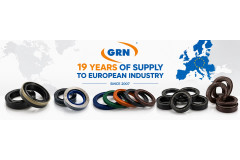
GRN RWDR, Combi and Cassette seals are designed for rotating shaft applications in machinery, gearboxes, hubs, drive systems and other mechanical assemblies. These designs differ in construction, contamination protection and intended operating environment.
In standard applications, a conventional radial shaft seal may be sufficient. In environments exposed to mud, water, dust, sand and heavy external contamination, a more advanced sealing system such as Combi or Cassette may be more appropriate.
The correct question is therefore not:
Which seal is best?
but rather:
Which sealing system matches the actual operating conditions?
What Does RWDR Mean?
RWDR refers to a radial shaft seal used between a stationary housing and a rotating shaft.
Its main functions can include:
- retaining oil or grease inside the mechanism
- reducing leakage of the working medium
- limiting contamination entering the assembly
- helping protect bearings and other mechanical components
A conventional radial shaft seal typically has a primary sealing lip running directly against the shaft surface.
Depending on the design, it may also include a dust lip, garter spring or other construction features adapted to the specific application.
Where Are RWDR Seals Used?
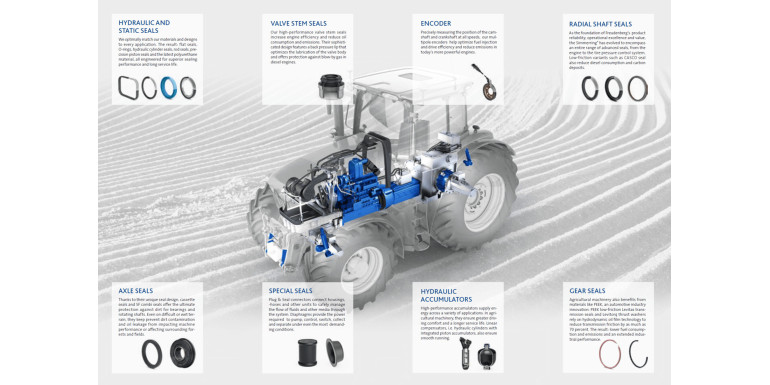
Radial shaft seals are among the most common sealing components used in:
- gearboxes
- electric motors
- pumps
- geared motors
- drive systems
- industrial machinery
- agricultural equipment
- construction machinery
- maintenance and repair operations
The correct RWDR depends on dimensions, material, design and actual working conditions.
What Is a Combi Seal?
A Combi seal is a more complex shaft sealing system than a conventional single radial shaft seal.
Its purpose is to combine the primary sealing function with additional protection against external contamination.
Depending on the specific design, a Combi seal may include several interacting sealing lips or components.
This makes it particularly useful where retaining lubricant is only part of the requirement and additional protection against dirt is also needed.
When Should a Combi Seal Be Considered?
Combi sealing systems can be useful in environments exposed to:
- dust
- dirt
- water
- mud
- road contamination
- outdoor operating conditions
Typical application areas include:
- agricultural machinery
- commercial vehicles
- construction equipment
- drive systems
- wheel-end assemblies
- gearboxes
- machinery operating outdoors
A Combi seal should always be selected according to the specific construction and technical parameters, not simply by the generic product type.
What Is a Cassette Seal?
A Cassette seal is an integrated sealing system designed for demanding operating environments.
Unlike a conventional radial shaft seal, a cassette design may include several interacting elements and its own running surfaces.
This can help isolate the primary sealing zone from aggressive external contamination.
A cassette seal should therefore not be described simply as “a standard oil seal with an extra lip”.
It is a more integrated sealing system.
Why Are Cassette Seals Used in Harsh Environments?
One of the main advantages of cassette-type sealing systems is the possibility of creating several contamination barriers within one assembly.
This can be particularly valuable in environments exposed to:
- sand
- mud
- dust
- water
- mineral contamination
- prolonged outdoor operation
For this reason, cassette seals are often found in:
- tractors
- agricultural machinery
- excavators
- loaders
- construction equipment
- off-road vehicles
- heavy-duty drive systems
RWDR vs Combi vs Cassette - What Is the Difference?
A simplified comparison is:
RWDR
A conventional radial shaft seal primarily used to control lubricant or another medium at a rotating shaft.
Combi
A more advanced sealing system combining primary sealing with additional protection against contamination.
Cassette
An integrated sealing system designed particularly for demanding environments and severe external contamination.
This does not mean that Cassette is always “better” than RWDR.
The best seal is the one that matches the actual sealing system and operating environment.
Why Should These Seal Types Not Be Interchanged Automatically?
Two seals may have similar nominal dimensions but very different constructions.
Differences can include:
- number of sealing lips
- shaft contact points
- integrated running surfaces
- installation width
- sealing material
- contamination protection
- sealing direction
- installation method
For this reason, Combi, Cassette and conventional RWDR seals should not be treated as automatic substitutes simply because their main dimensions appear similar.
How Are Shaft Seal Dimensions Specified?
For conventional radial shaft seals, a common size format is:
Shaft Diameter x Outside Diameter x Width
For example:
45x62x10 mm
typically means:
- 45 mm shaft diameter
- 62 mm outside diameter
- 10 mm seal width
Combi and Cassette systems may involve more complex dimensional and construction requirements.
For identification, it is therefore useful to consider:
- complete product marking
- manufacturer
- reference number
- seal construction
- photograph of the original seal
- machine application
Seal Material Matters
Construction is only one part of seal selection.
The second major factor is material.
Depending on the specific product, shaft seals may use elastomers such as:
- NBR
- FKM / FPM
- HNBR
- ACM
- Silicone / MVQ
- PU
as well as PTFE or other specialist materials.
A single operating temperature range should not be assigned to all RWDR, Combi or Cassette seals.
Temperature capability depends on the specific material, design and application.
Why Is NBR So Common?
NBR is one of the most widely used elastomers in radial shaft seals.
It offers good resistance to many mineral oils and lubricating greases together with useful mechanical properties for standard technical applications.
NBR shaft seals are commonly used in:
- gearboxes
- machinery
- vehicles
- industrial equipment
- drive systems
However, NBR is not suitable for every medium or every temperature range.
When Should FKM Be Considered?
FKM / FPM may be considered where the application requires different chemical or temperature resistance from standard NBR.
It can be suitable for many oils, fuels and technical media.
However, FKM should not automatically be selected simply as a “better NBR”.
Material selection must be based on actual operating conditions.
Common Causes of RWDR, Combi and Cassette Seal Failure
Even a correctly manufactured seal can perform poorly if installation or operating conditions are unsuitable.
Typical causes include:
- incorrect dimensions
- wrong material
- installation damage
- contaminated surfaces
- shaft damage
- corrosion
- wear grooves
- unsuitable running surface
- incorrect installation direction
- wrong seal type for the application
For Combi and Cassette seals, correct installation of the complete sealing assembly is particularly important.
How to Select a GRN Shaft Seal
A useful technical selection process should consider:
1. Shaft diameter
2. Housing diameter
3. Seal width
4. Seal type - RWDR, Combi or Cassette
5. Material
6. Operating medium
7. Temperature
8. Shaft speed
9. External environment
10. Existing product marking
If an OEM reference or complete marking from the original seal is available, it should also be retained.
GRN Seals for Agricultural Machinery
Agriculture is one of the natural application areas for advanced contamination-resistant sealing systems.
Agricultural machines operate in environments containing:
- soil
- mud
- dust
- water
- plant debris
In these conditions, protection against external contamination can be just as important as retaining lubricant inside the mechanism.
For suitable applications, Combi and Cassette designs can therefore provide additional protection.
GRN Seals for Construction Machinery
Construction machinery also operates in conditions that can be highly aggressive for conventional seals.
Excavators, loaders and road equipment may be exposed to:
- dust
- sand
- water
- mud
- rapidly changing operating conditions
In such cases, a more integrated sealing system can provide better protection for the primary sealing zone.
GRN Seals for Maintenance and MRO
Not every application requires a Cassette design.
In industrial plants, conventional RWDR seals are often entirely appropriate.
For maintenance departments, the key advantage is therefore access to different sealing designs, rather than relying on a single construction type.
simmering.pl develops the GRN range for:
- maintenance departments
- MRO
- service companies
- manufacturing plants
- workshops
- machine manufacturers
- technical distributors
GRN - Supply Experience Since 2007
TG Ersatzteile Polska Sp. z o.o. was established in 2002, and GRN was introduced to our product range in 2007.
Since then, GRN sealing products have been supplied to professional customers in Poland and other European markets.
They have been used by manufacturers in Germany as well as customers in France and other European countries.
Throughout our supply history, we have not recorded a quality complaint concerning the GRN sealing products supplied by us.
In 2026, this represents 19 years of experience with GRN.
Where Are GRN Seals Manufactured?
GRN seals are manufactured in China.
However, we do not describe the production facility as “the largest factory in the world” and we do not base product quality on country of manufacture alone.
For a professional buyer, more important factors include:
- correct specification
- dimensional accuracy
- appropriate material
- correct construction
- repeatability of supply
- experience gained from long-term use
These are the criteria that should be used when evaluating a technical sealing product.
GRN as an Alternative Supply Source
For industrial companies and distributors, GRN can also serve as an alternative source of shaft sealing products.
This can be useful where a company wants to reduce dependence on a single supply channel.
It does not mean that every seal from another manufacturer can automatically be replaced with GRN.
Any replacement should be verified according to:
dimensions + construction + material + operating conditions
simmering.pl - Supplier of RWDR, Combi and Cassette Seals
simmering.pl specialises in technical sealing products, radial shaft seals and industrial sealing solutions.
The range includes, among others:
- conventional RWDR seals
- Combi seals
- Cassette seals
- NBR shaft seals
- FKM / FPM shaft seals
- specialist sealing designs
We serve individual and professional customers, including manufacturers, maintenance departments, MRO, service companies and B2B buyers.
Our warehouse and store are located in Lublin, Poland, while orders are supplied throughout Poland and to international markets.
FAQ - GRN RWDR, Combi and Cassette Seals
What does RWDR mean?
RWDR refers to a radial shaft seal used between a rotating shaft and a stationary housing.
How is a Combi seal different from a standard RWDR?
A Combi seal is a more complex sealing system that combines primary sealing with additional contamination protection.
What is a Cassette seal?
A Cassette seal is an integrated sealing system with several interacting components, designed particularly for demanding environments.
Is a Cassette seal always better than a standard oil seal?
No. The correct choice depends on machine design and operating conditions.
Are Combi and Cassette seals used in agricultural machinery?
Yes. They can be used in suitable agricultural applications, particularly where mud, water, dust and external contamination are significant.
Are GRN seals manufactured in China?
Yes. GRN seals are manufactured in China.
Since when has GRN been part of the simmering.pl range?
GRN was introduced to the TG Ersatzteile Polska Sp. z o.o. product range in 2007.
Are GRN seals available for B2B customers?
Yes. simmering.pl serves manufacturers, distributors, maintenance departments, service companies and other industrial B2B customers.
GRN RWDR, Combi and Cassette - Different Designs for Different Conditions
There is no single shaft seal design suitable for every machine.
A conventional RWDR may be the correct choice in standard conditions.
A Combi seal can provide additional protection where external contamination is more severe.
A Cassette seal is a more integrated solution for applications where the complete sealing system is exposed to particularly demanding operating environments.
The objective is therefore not to select the “strongest” seal, but to choose the correct construction for the actual application.
GRN has been part of our product range since 2007, and simmering.pl continues to develop the range for industry, agriculture, construction machinery, maintenance, MRO, manufacturers and professional B2B customers.

Leave a Reply Cancel Reply