
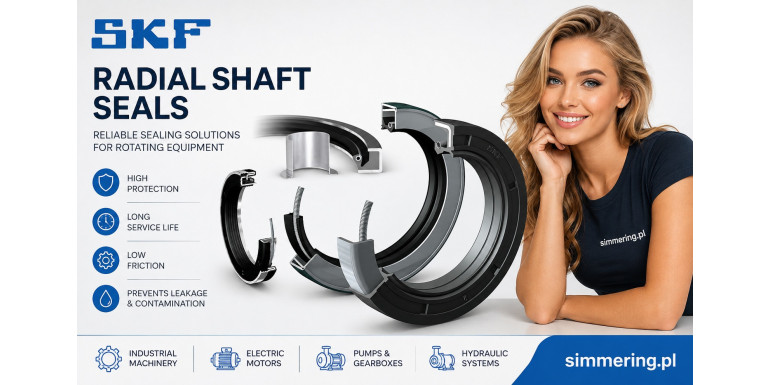
What Is an SKF Radial Shaft Seal?
An SKF radial shaft seal, also known as a rotary shaft seal, oil seal or shaft seal, is a precision-engineered sealing component designed to retain lubricants while preventing contaminants such as dust, dirt, water and moisture from entering rotating machinery.
SKF radial shaft seals are widely used in industrial equipment, automotive systems, agricultural machinery, hydraulic equipment, electric motors, pumps, gearboxes and heavy-duty machinery where reliable sealing is essential for long service life.
The primary function of the seal is to create a continuous dynamic sealing contact between the rotating shaft and the stationary housing, reducing lubricant loss and protecting critical mechanical components.
Why SKF Radial Shaft Seals Are Trusted Worldwide
SKF is recognized globally as one of the leading manufacturers of sealing solutions, combining decades of engineering expertise with advanced elastomer technology and precision manufacturing.
SKF radial shaft seals offer:
- Outstanding sealing performance
- Long service life
- Excellent wear resistance
- Low friction
- Reliable operation at high shaft speeds
- Superior resistance to contaminants
- Consistent sealing pressure
- OEM-quality manufacturing
- Global industrial acceptance
These characteristics make SKF seals the preferred choice for demanding industrial and automotive applications.
How Does a Radial Shaft Seal Work?
A radial shaft seal operates by maintaining controlled contact between its flexible sealing lip and the rotating shaft.
During operation:
- the sealing lip retains lubricating oil or grease,
- the elastomer adapts to shaft movement,
- a thin lubrication film minimizes friction,
- the garter spring maintains constant sealing force,
- contaminants are prevented from entering the housing.
Proper lubrication at the sealing interface significantly reduces wear and extends seal life.
Main Components of an SKF Radial Shaft Seal
An SKF rotary shaft seal typically consists of several precisely engineered components:
Sealing Lip
The flexible sealing lip provides the primary dynamic sealing contact with the rotating shaft.
Garter Spring
The spring maintains consistent radial pressure throughout the seal's service life, compensating for normal wear.
Metal Reinforcement
The steel insert provides dimensional stability and secure installation inside the housing.
Elastomer Body
The rubber outer body absorbs vibration, compensates for manufacturing tolerances and ensures reliable static sealing.
SKF Seal Materials
SKF manufactures radial shaft seals using elastomer compounds optimized for different operating environments.
NBR (Nitrile Rubber)
Suitable for:
- mineral oils
- grease lubrication
- standard industrial equipment
- automotive applications
Advantages:
- economical
- excellent wear resistance
- good oil compatibility
FKM (Viton®)
Recommended for:
- high temperatures
- synthetic lubricants
- aggressive chemicals
- industrial processing
- demanding operating conditions
Advantages:
- outstanding chemical resistance
- extended temperature range
- long service life
HNBR
Ideal for:
- heavy-duty industrial machinery
- modern engine systems
- increased temperature resistance
- ozone resistance
PTFE
Designed for:
- dry-running applications
- extremely high shaft speeds
- aggressive chemicals
- low-friction operation
Common SKF Radial Shaft Seal Designs
SKF offers numerous sealing profiles to match different industrial requirements.
Popular designs include:
- Single lip seals
- Double lip seals
- Rubber-covered seals
- Metal-cased seals
- Cassette seals
- Heavy-duty seals
- High-speed seals
- PTFE seals
- Hydraulic shaft seals
- Custom-engineered sealing solutions
Selecting the appropriate design depends on operating conditions, shaft finish and environmental exposure.
Typical Applications
SKF radial shaft seals are installed in countless rotating systems, including:
- Electric motors
- Industrial gearboxes
- Pumps
- Compressors
- Agricultural machinery
- Construction equipment
- Automotive transmissions
- Wheel hubs
- Hydraulic pumps
- Conveyor systems
- Wind turbines
- Mining equipment
- Marine applications
- Food processing machinery
- Manufacturing automation
Benefits of Using Genuine SKF Seals
Original SKF radial shaft seals provide measurable operational advantages.
Key benefits include:
- Reduced lubricant leakage
- Extended bearing life
- Lower maintenance costs
- Increased machine reliability
- Reduced downtime
- Improved energy efficiency
- Excellent dimensional accuracy
- High-quality elastomer compounds
- Consistent manufacturing standards
- Worldwide OEM acceptance
Selecting the Correct SKF Seal
Proper seal selection requires consideration of multiple operating factors.
Important parameters include:
- Shaft diameter
- Housing bore diameter
- Seal width
- Rotational speed
- Operating temperature
- Lubricant type
- Pressure conditions
- Surface finish
- Shaft hardness
- Environmental contamination
Correct selection significantly increases sealing performance and service life.
Installation Best Practices
Maximum seal life depends on correct installation.
Recommended practices:
- Inspect shaft condition.
- Check housing dimensions.
- Lubricate the sealing lip before installation.
- Use appropriate installation tools.
- Avoid damaging the sealing edge.
- Ensure correct installation depth.
- Verify shaft surface finish.
- Prevent contamination during assembly.
Proper installation is just as important as selecting the correct seal.
Why Professionals Choose SKF
SKF radial shaft seals are trusted by engineers, maintenance teams and OEM manufacturers because they combine precision engineering, premium materials and proven sealing performance.
Whether protecting industrial gearboxes, electric motors, pumps or automotive systems, SKF sealing technology delivers reliable operation, reduced maintenance requirements and long-term equipment protection.
For businesses seeking maximum reliability, lower operating costs and extended machine life, genuine SKF radial shaft seals remain one of the industry's most trusted sealing solutions.

Leave a Reply Cancel Reply